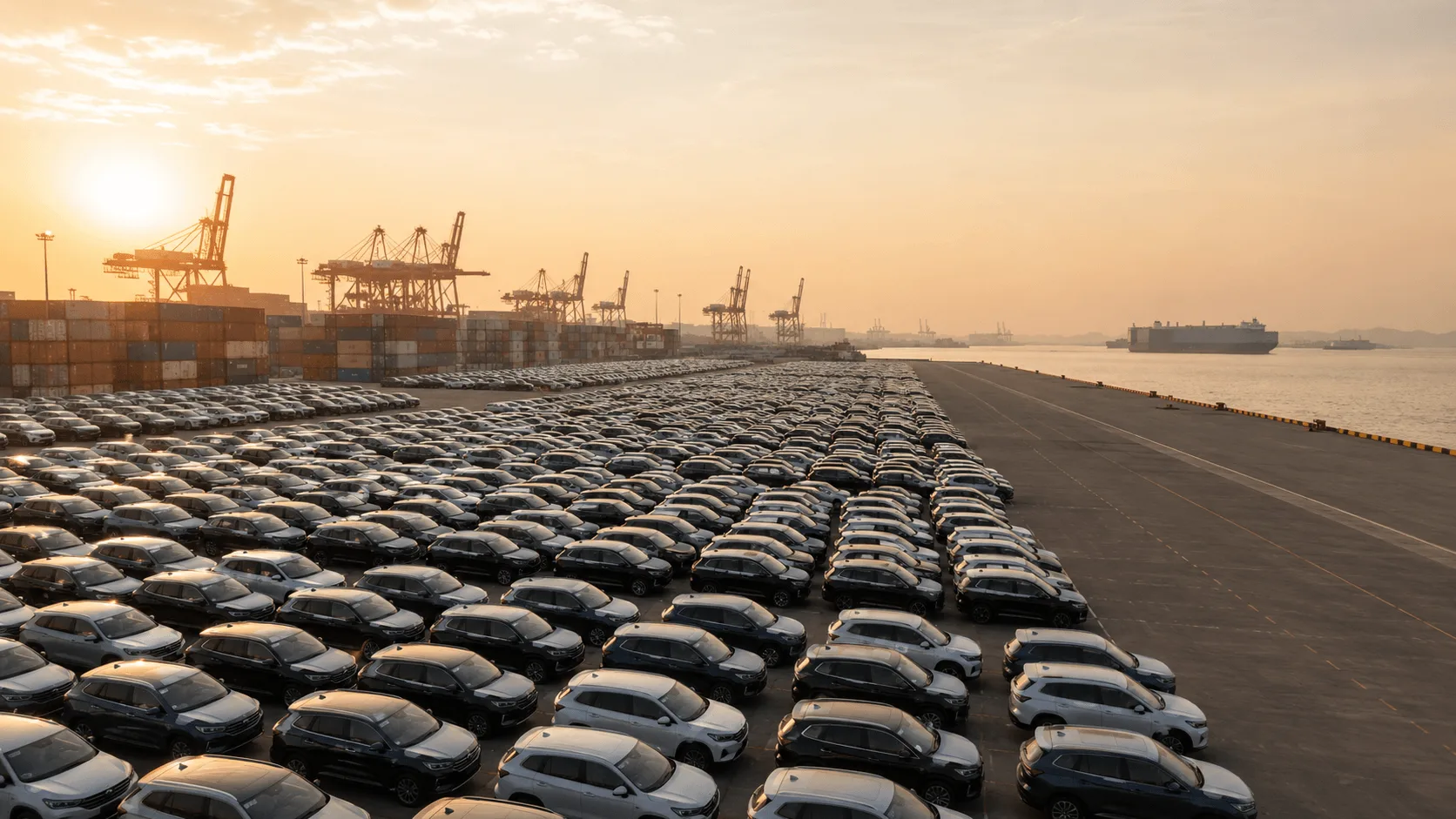
RoRo vs Container Shipping for Chinese Vehicles — Cost, Speed & Risk Compared

When a buyer asks for a CIF quote on a BYD Atto 3 or a Jetour T2, the first question we ask back is: RoRo or container? Both move vehicles from China to your port — but the cost, speed, risk and paperwork are very different. Choosing wrong can cost you several hundred dollars per unit, or weeks of delay at destination.
This guide walks through both shipping modes the way our operations team explains it to a first-time importer over WhatsApp.
RoRo at a glance
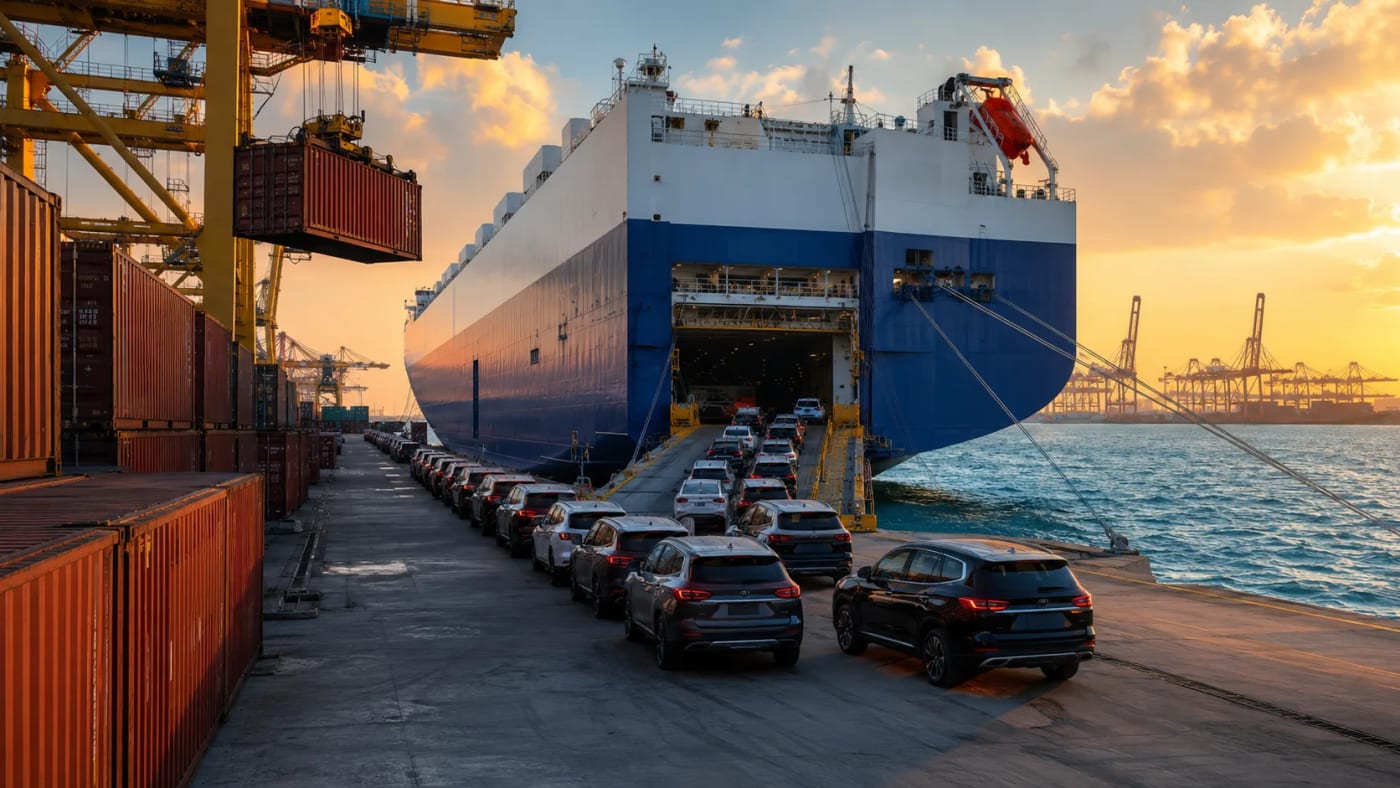
Roll-on/Roll-off (RoRo) means your vehicle drives onto a dedicated car carrier vessel at the Chinese port, sits on a deck with hundreds of other cars, then drives off at destination. There is no container, no crating, no stuffing.
Typical strengths: lowest per-unit ocean freight for cars and SUVs, weekly or bi-weekly sailings on major China-Africa and China-LatAm routes, predictable departure schedules from Shanghai, Xiamen, Guangzhou and Tianjin. Typical limits: vehicles must be drivable (battery charged, tires inflated, no fluid leaks), no personal items inside, exposed to handling by stevedores at both ends.
Container at a glance
A 40-foot high-cube container fits 3 sedans or 2 SUVs in a single layer, or 4 sedans with proper bracing in a two-layer load. The vehicle is lashed inside a steel box and only handled by Sino Gear staff at origin.
Typical strengths: enclosed, sealed and trackable; the only practical way to ship non-drivable inventory (used cars under repair, salvage units), and the best protection for high-value or new vehicles where every scratch matters. You can also load spare parts, tires and accessories alongside the vehicle. Typical limits: higher freight per unit, fewer direct sailings on niche routes, and the container has to be returned to the line after destuffing.
Cost comparison
On the China–West Africa lane in a normal market, RoRo for a mid-size SUV runs roughly 35-55% cheaper per unit than container — but the gap narrows fast on smaller routes or during peak season when RoRo space sells out. On China–Caribbean and China–South America lanes, container often wins because direct RoRo sailings are rarer and transhipment fees eat the savings.
For mixed-volume orders (1 EV + 1 used sedan + a pallet of spare parts), container is almost always the better answer.
Risk profile
On RoRo: minor cosmetic damage during deck handling happens. Sino Gear photographs every vehicle at the port gate and again at vessel loading, so disputes can be resolved against documented condition. EVs need at least 50% state of charge to drive on and off the vessel; we always charge to 60-70% before delivery to the port.
On container: damage risk is lower but lashing quality matters enormously. We use four-point ratchet straps and rubber blocks under the wheels, never wood blocks against the bumper.
Which one should you pick?
A useful rule we share with first-time importers: if this is your first or second shipment and you are buying 1-3 vehicles, ship container. The slightly higher freight buys you peace of mind and easier insurance claims. Once you are doing 8+ vehicles per shipment on a familiar route, RoRo usually wins on total landed cost.
Whatever you choose, ask Sino Gear for the side-by-side quote with both options — the math is different for every destination port. WhatsApp +86 155-5517-2187 with your destination and quantity, and we will send both numbers back the same day.
Related Tags
Interested in exporting this vehicle?
Share your destination market and quantity requirements, and our team will prepare a tailored quotation for you.
Contact Us NowRecommended Models
Explore our top-rated SUVs and Pickups available for immediate export.

FANG CHENG BAO LEOPARD 5
Starting from $43,000

FANG CHENG BAO LEOPARD 8
Starting from $70,000

JETOUR TRAVELLER T2
Starting from $29,000
Need a quotation or export plan?
Tell us your destination country, usage, and estimated volume, and we will prepare a detailed export solution for you.
Chat via WhatsAppMore Articles
How to Import a Car from China: A Step-by-Step Guide (2026)
How to Pay Safely When Importing a Car from China (and Avoid Getting Scammed)
BYD Song Plus DM-i vs Toyota bZ4X: Should You Import a Plug-in Hybrid or a Full EV?